 English
  Español
  Português
  日本語
日本語  Français
  繁體中文
繁體中文  简体中文
简体中文 
I. Understanding Heel Spurs
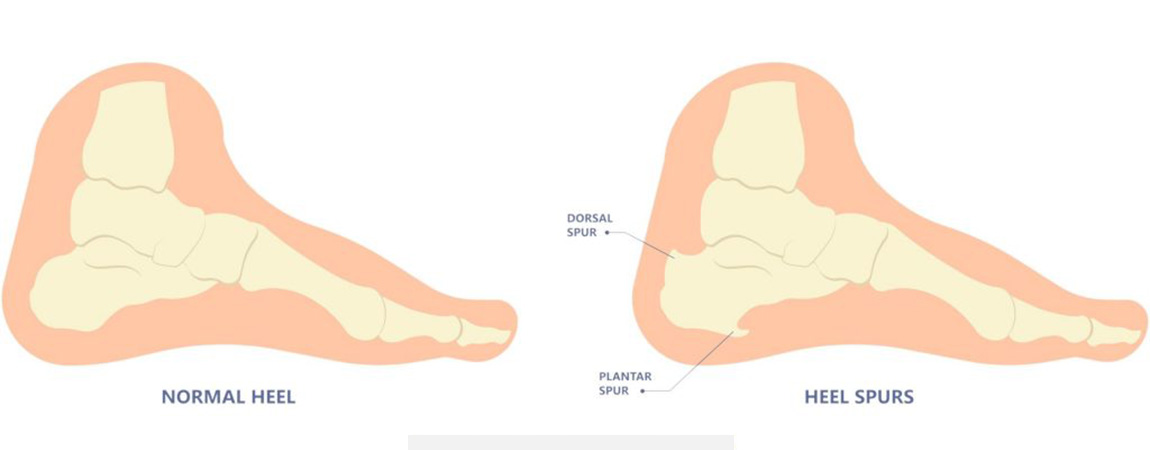
A heel spur is a bony protrusion caused by calcium deposits that form when the plantar fascia or Achilles tendon pulls excessively on the heel bone (calcaneus) over time.
-
Common Symptoms:
-
Sharp Pain: Particularly when taking the first steps in the morning or standing up after a long period of sitting.
-
Localized Tenderness: A palpable hard lump or pain at the bottom or back of the heel.
-
Associated Inflammation: Often accompanied by plantar fasciitis or Achilles tendinitis.
-
II. Core Causes of Bone Spurs
-
Improper Gait: Abnormal walking patterns causing excessive localized pressure.
-
Inadequate Arch Support: Flat feet or high arches leading to tension concentration at the heel.
-
Poor Footwear: Long-term use of shoes with hard soles or lack of cushioning.
III. Aybroad: Neutralizing Pressure via Scientific Engineering
Aybroad's R&D methodology focuses on "pressure reduction" and "force neutralization" to alleviate pain.
-
Targeted Relief: "Shock Absorption Cabin" Design By utilizing hollow-out decompression or Specialized GEL inserts, we create a soft environment for the spur, preventing direct impact with the shoe sole.
-
Material Mechanics: E-TPU & PU Synergy We combine the high elasticity of E-TPU with the stability of PU to absorb ground reaction forces and reduce calcaneal load.
-
Gait Correction: Data-Driven Arch Support Using biomechanical modeling, we design arch curves that redistribute pressure across the entire foot, reducing strain on the tendons.
-
Rigorous Validation: Tested under ASTM D3574 standards to ensure the cushioning layer remains stable and effective over long-term use.