 English
  Español
  Português
  日本語
日本語  Français
  繁體中文
繁體中文  简体中文
简体中文 
Impact Diffusion Material vs Traditional Insole Materials – A New Standard in Shock Absorption
Insole materials play a critical role in comfort, performance, and foot protection. Traditional materials like EVA, PU, and foam have been widely used for years.
However, a new generation of materials—Impact Diffusion Materials—is changing how shock absorption works.
In this article, we compare impact diffusion materials vs traditional insole materials to understand their differences and advantages.
What Are Traditional Insole Materials?
Traditional insoles are typically made from:
- EVA (lightweight cushioning)
- PU (durability and support)
- Memory foam (comfort)
- Gel inserts (localized cushioning)
👉 These materials mainly work by compressing under pressure.
What Is Impact Diffusion Material?
Impact diffusion material is an advanced cushioning material designed to:
- Absorb high-impact forces
- Minimize rebound
- Distribute energy across a wider area
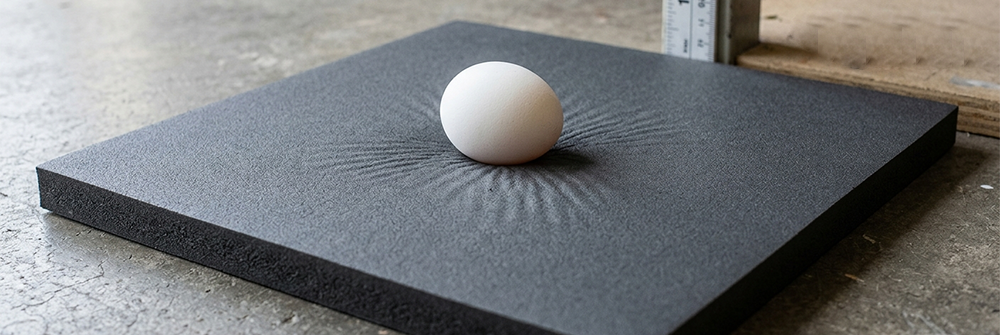
👉 Instead of simply compressing, it spreads impact energy outward, reducing localized stress.
Real Impact Test Comparison
A simple drop test demonstrates the difference:
👉 When an object is dropped onto traditional foam:
- It compresses
- Then rebounds
- Energy returns upward
👉 When dropped onto impact diffusion material:
- The material absorbs the force
- No significant rebound occurs
- Energy is dispersed across the surface
👉 This results in:
✔ Reduced impact feedback
✔ More stable contact
✔ Better protection
Key Differences
| Feature | Impact Diffusion Material | Traditional Materials |
|---|---|---|
| Shock absorption | Excellent | Moderate |
| Energy rebound | Very low | Medium–high |
| Impact distribution | Wide area | Localized |
| Stability | High | Medium |
| Comfort feel | Stable & controlled | Soft but reactive |
Why Low Rebound Matters
High rebound materials return energy quickly, which may:
- Increase stress on joints
- Create unstable landing
👉 Low rebound materials:
- Absorb impact more effectively
- Provide controlled movement
- Improve stability during activity
Benefits in Sports Insoles
Using impact diffusion materials in insoles helps:
🔹 Reduce Impact Stress
Especially during running and jumping.
🔹 Improve Stability
Less rebound means more controlled movement.
🔹 Enhance Comfort
Even pressure distribution reduces fatigue.
🔹 Upgrade Product Positioning
Advanced materials help create premium products.
Application Scenarios
Impact diffusion materials are ideal for:
- Running insoles
- Training insoles
- High-performance footwear
- Comfort-focused products
Combining with Traditional Materials
In many cases, the best performance comes from combining materials:
- Top layer: foam for comfort
- Bottom layer: impact diffusion for protection
👉 This creates a balance between cushioning and stability.
Custom Insole Development (OEM / ODM)
As a professional insole manufacturer, we can integrate advanced materials into your product line:
✔ Material Engineering
- Multi-layer structure design
- Performance tuning
✔ Functional Design
- Heel impact zones
- Full-length cushioning
✔ Custom Branding
- Private label
- Custom packaging
Conclusion
Traditional materials provide basic cushioning, but impact diffusion materials represent a new level of performance.
By combining shock absorption, low rebound, and energy dispersion, they offer a more advanced solution for modern insole design.
Looking to Develop Advanced Insoles?
If you are exploring next-generation insole materials:
👉 Contact us to develop custom insoles with advanced shock absorption technology.